Wire vs abrasive nylon roller brushes: how to choose
- Wire cuts by impact and shearing; abrasive nylon grinds with grit carried in the filament.
- Choose wire for heavy scale and rust, abrasive nylon for burrs, edges and even finishes.
- Many lines run both: wire first to strip, abrasive nylon second to blend.
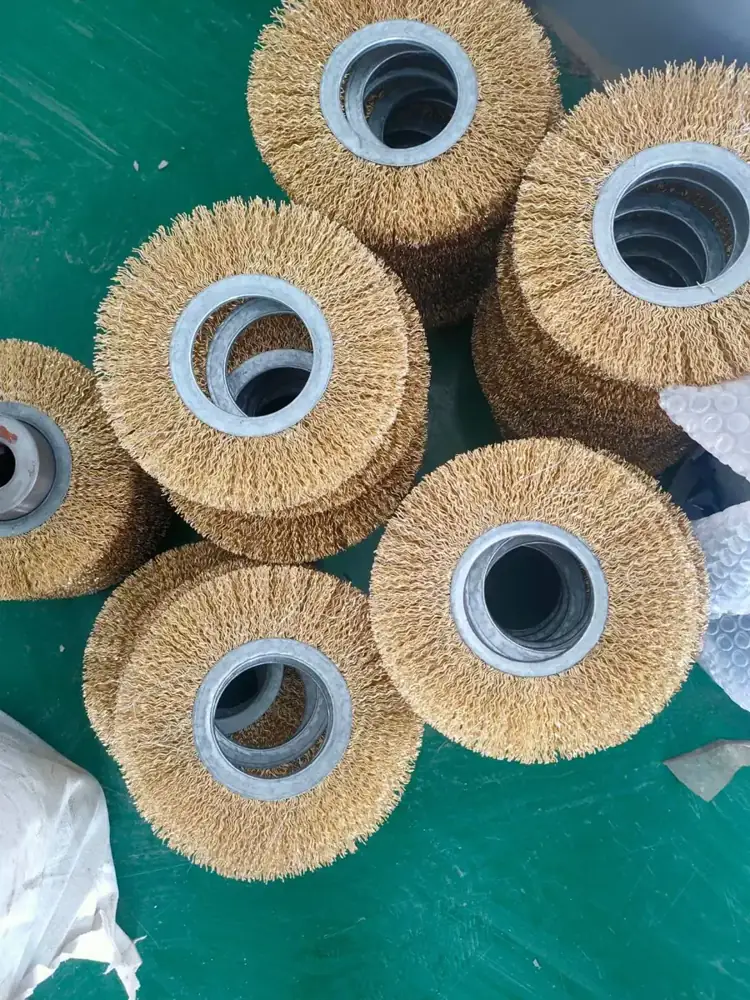
Choose a wire roller brush when the job is removing heavy scale, rust or weld spatter fast. Choose an abrasive nylon roller brush when the job is removing burrs, rounding edges or leaving an even finish without deep scratches. Wire cuts harder; abrasive nylon follows the surface and grinds the burr away instead of bending it over.
Most comparisons of these two fills are written for angle grinders and hand tools. A roller brush on a production line adds its own questions: line speed, wet or dry running, what happens to the part after brushing, and what a broken filament does downstream. This guide answers the choice from that angle.
If you already know the fill and need the build details, see the industrial roller brush construction guide.
Is a nylon brush the same as a wire brush?
No. A wire brush is filled with steel, stainless or brass wire that hits the surface and shears material off. A plain nylon brush only sweeps and scrubs. An abrasive nylon brush sits between them: its nylon filament carries silicon carbide or aluminum oxide grit, so each bristle works like a flexible file.
That difference in mechanism explains most of the table below. Wire removes material by impact, so it is fast but can push a small burr over instead of removing it. Abrasive nylon removes material by grinding, so it is slower on heavy deposits but leaves a cleaner edge.
| Factor | Wire roller brush | Abrasive nylon roller brush |
|---|---|---|
| How it removes material | Impact and shearing by wire tips | Grinding by grit along the filament |
| Heavy scale, rust, spatter | Fast | Slow; loads up on thick deposits |
| Burrs | Removes large burrs; can leave a small secondary burr | Grinds burrs away and rounds the edge |
| Finish | Brighter but uneven, deeper scratch pattern | Even satin finish; scratch depth set by grit |
| Contours, holes, slots | Stiff; reaches less | Flexes into contours and cross holes |
| Heat | Tolerates heat well | Nylon softens if run hot and dry |
| Wet lines | Stainless or brass only; carbon steel rusts | Works well wet; water cools and flushes fines |
| Sparks and fly-out | Can spark; broken wire can travel downstream | No sparks; no sharp metal fragments |
| Surface contamination | Carbon steel wire leaves iron on stainless and aluminum | No metal transfer |
| Wear behavior | Cuts until wire fatigues and breaks | Grit runs through the filament, so it keeps cutting as it wears |

When should you choose a wire roller brush?
Choose wire when the deposit is thick, hard or bonded to the metal: mill scale, rust, heat tint, weld spatter, old coating or packed dirt on rolls. Wire removes it in fewer passes, runs hot without damage and lasts well on heavy work. Use stainless or brass wire wherever carbon steel would leave rust spots.
- Descaling strip, plate and sections before coating or welding
- Cleaning process rolls and conveyor parts with hard build-up
- Removing sand and flash from castings
- Texturing soft timber for a brushed, weathered look
Details of wire types and diameters are on the industrial wire brush roller page.
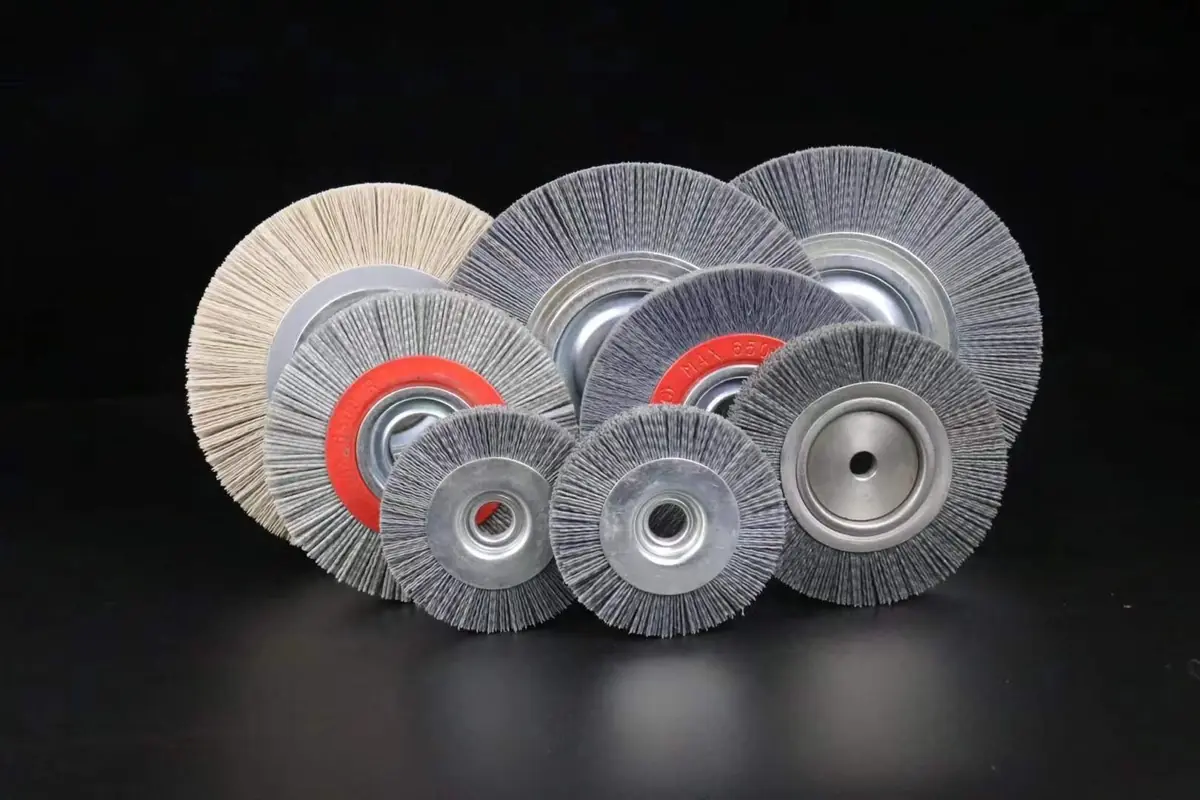
When is abrasive nylon the better choice?
Choose abrasive nylon when the part is already clean and the job is the edge or the finish: removing burrs after cutting or machining, rounding sharp edges before coating, blending weld marks, or giving aluminum and stainless an even satin surface. It also suits parts that must stay free of metal particles.
- Deburring laser, plasma and punched sheet parts
- Edge rounding so paint and powder coat do not thin at the edge
- Scrubbing copper-clad circuit boards before lamination
- Satin finishing aluminum and stainless before anodizing or packing
Grit types and filament sizes are covered on the abrasive nylon roller brush page.
Will an abrasive nylon brush scratch metal?
Yes, lightly and on purpose. The grit leaves a fine, even scratch pattern, which is what gives a satin finish and helps coatings key to the surface. Coarse grit scratches deeper; fine grit leaves a smoother surface. Plain nylon without grit will not scratch metal, but it will not deburr either.
If a finish shows streaks or bright bands, the cause is usually uneven contact rather than the grit: a worn flat on the brush, too much interference in one zone, or a line speed that leaves some areas brushed longer than others.
Can one line use both wire and abrasive nylon?
Yes, and many do. A wire roller goes first to strip scale or heavy oxide, then an abrasive nylon roller follows to remove the secondary burrs the wire leaves and to even out the finish. Running them in that order lets each brush do the job it is best at, and both last longer.
The order matters. Put abrasive nylon first on a scaled part and the grit loads up and wears fast. Put wire last on a finished part and it undoes the edge and the finish the abrasive stage created.
When two stages are not possible, a single abrasive nylon roller with coarse grit and thicker filament can handle light scale, while a fine stainless wire roller can handle light deburring. Tell us the part and the line, and we will suggest which compromise costs you less.
What mistakes cause poor results with either fill?
Four mistakes cause most brushing problems: pushing the brush deeper to make up for wear, running abrasive nylon hot and dry, using carbon steel wire on stainless or aluminum, and choosing only by grit or wire size without looking at trim length and density. Each one changes how the filament bends and what it leaves behind.
- Too much interference. Only the filament tips should work. Deeper contact bends wire at the root until it breaks, and flattens nylon so it rubs instead of cutting.
- Dry, hot abrasive nylon. Nylon softens with heat and wears fast. Add water or coolant, or lower the pressure.
- Wrong wire on stainless. Carbon steel particles embed in stainless and aluminum and rust later. Use stainless or abrasive nylon.
- Grit alone. A short trim makes any filament stiffer and more aggressive; a long trim makes it softer. Set grit and trim together.
Wire and abrasive nylon questions
Which lasts longer, wire or abrasive nylon?
+
It depends on the job. On heavy scale, wire lasts longer because abrasive nylon loads up and wears quickly. On deburring and finishing, abrasive nylon often lasts longer because the grit runs through the whole filament and it does not fail by fatigue the way wire does.
Which is better for aluminum?
+
Usually abrasive nylon with silicon carbide grit. It removes burrs and leaves an even finish without embedding steel particles. If aluminum parts carry heavy oxide or old coating, a stainless wire roller can go first.
Is abrasive nylon safer than wire?
+
It removes two common hazards: sparks and sharp broken wire. Abrasive nylon still sheds grit and fine dust, so guards, extraction and eye protection are still needed, and the brush must run within its rated speed.
Can you build one roller with both fills?
+
Yes. We can wind or stack different fills along one roller, for example abrasive nylon in the middle and wire at the edges. It suits wide parts where the edges need more aggressive work than the face.
Related pages
Not sure which fill your line needs?
Send the material, the deposit or burr, the line speed and whether it runs wet. We will propose a fill, grit or wire size, and trim.