Spiral brush rollers
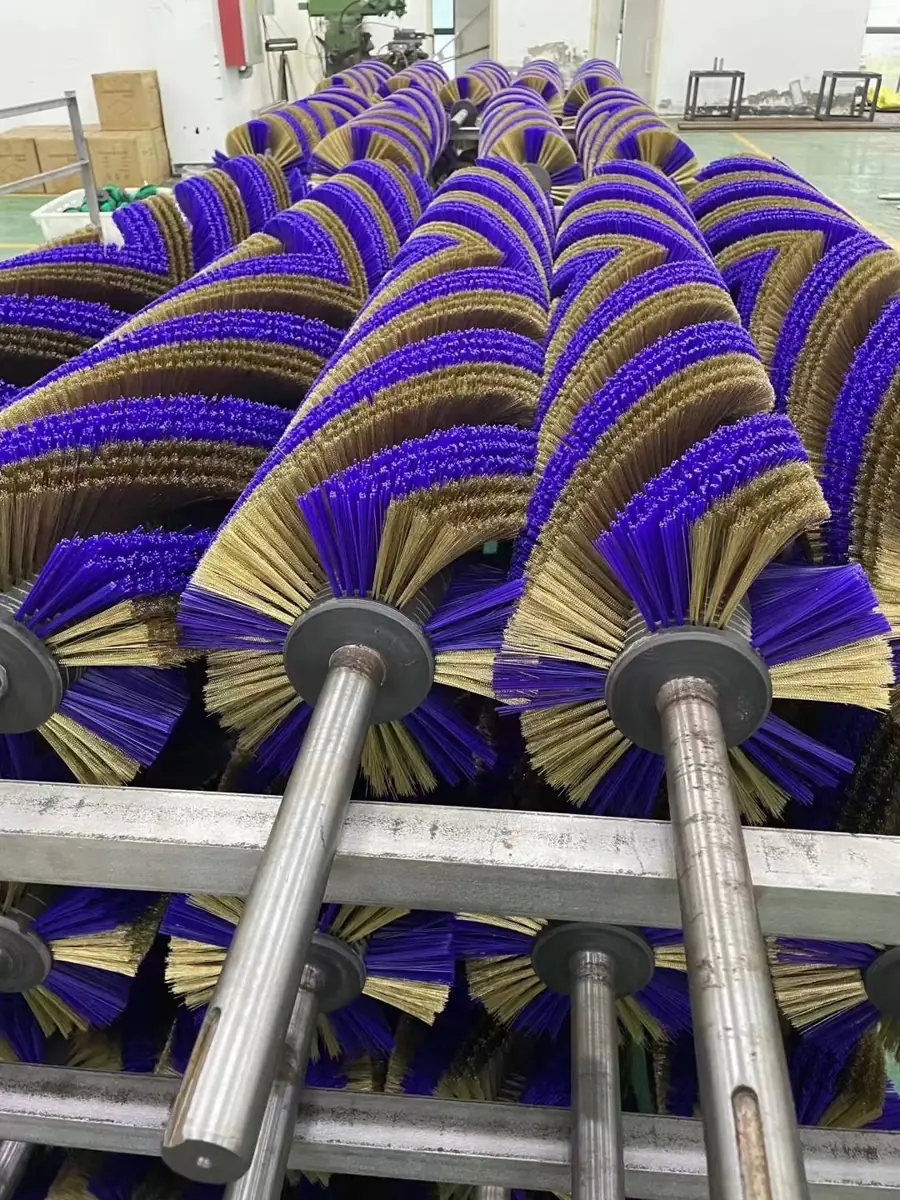
A spiral brush roller, also called a coil brush, is made by winding a metal channel strip brush around a tube in a helix. Change the gap between turns and the same method gives an open spiral that conveys and spreads, or a closed wind that scrubs as hard as a tufted brush. Long lengths are quick to build and easy to refill.
What does the spiral pitch do?
Pitch is the distance between one turn of strip and the next. A wide pitch leaves gaps, so the brush pushes material sideways and lets water drain. A tight pitch, down to turns touching, gives full contact for scrubbing and polishing. Single, double and triple starts change how many strips share the tube.
The direction of the helix matters too. Seen from the drive end, a left-hand or right-hand wind decides which way debris travels. On a replacement, match the old brush. On a new machine, point the flow toward the discharge side.
| Winding | What it does | Typical use |
|---|---|---|
| Open pitch, single start | Moves material along the roller; drains fast | Conveying, sorting, spreading powder or seed |
| Medium pitch, double start | Even cleaning with some side flow | Belt cleaning, panel washing, dust removal |
| Closed pitch | Full contact, highest density | Scrubbing, polishing, deburring |
| Two fills wound together | Mixes a stiff and a soft fill in one pass | Scrub and wipe, or cut and polish |
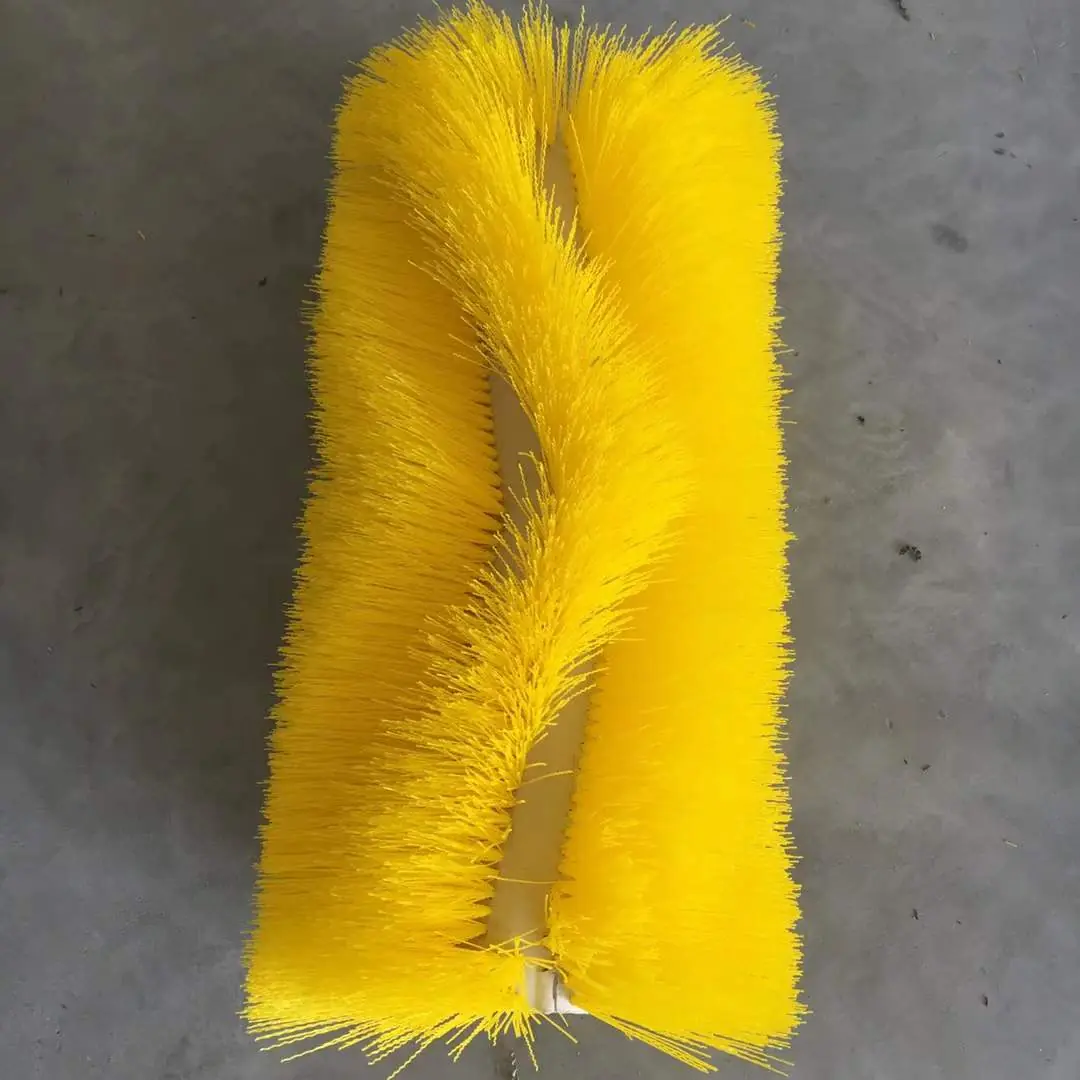
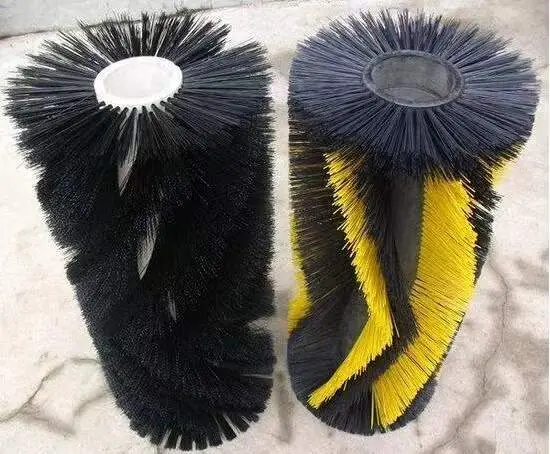
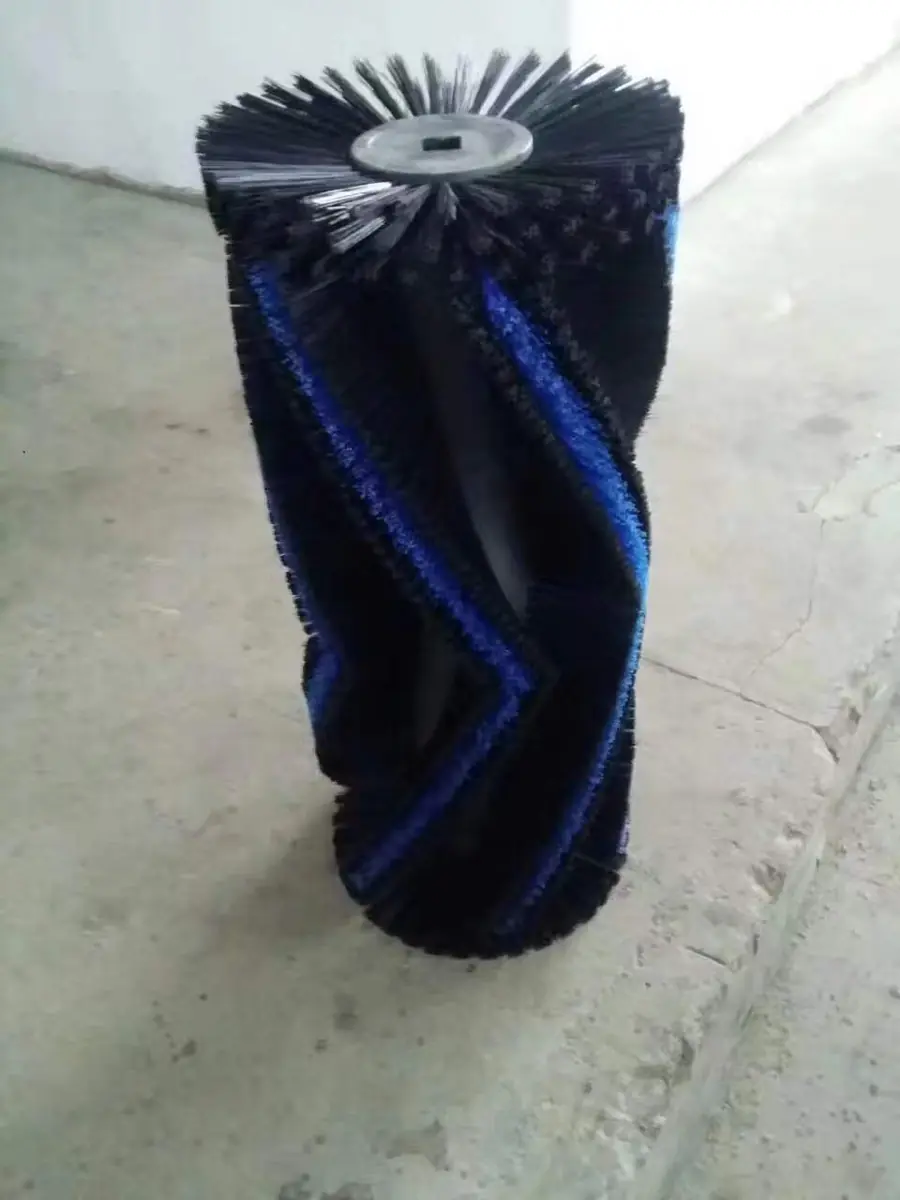
Which dimensions define a spiral brush roller?
Ten measurements, lettered A to J below, describe a spiral brush roller completely. A to F fix the size and the shaft ends. G, H and I set the density and feel of the fill. J records the wind direction and number of starts, which decides where debris travels. Mark the letters on your photo or drawing.
| Letter | Dimension | How to measure |
|---|---|---|
| A | Overall length | End to end, including both shafts |
| B | Brush face length | Where the fill starts and stops |
| C | Outside diameter | Across the fill; give the new size if you know it |
| D | Core tube diameter | Outside of the tube, visible at the ends |
| E | Shaft diameter | Each journal; note keyways, flats or threads |
| F | Shaft step length | Length of each step, from the core outward |
| G | Pitch | Center to center of two strip turns, along the axis |
| H | Trim length | Filament length out of the channel |
| I | Channel strip size | Width and height of the metal channel |
| J | Wind direction and starts | Left or right hand, seen from the drive end; single or double start |
Missing a number? Send photos with a tape measure in shot and we fill in the rest.
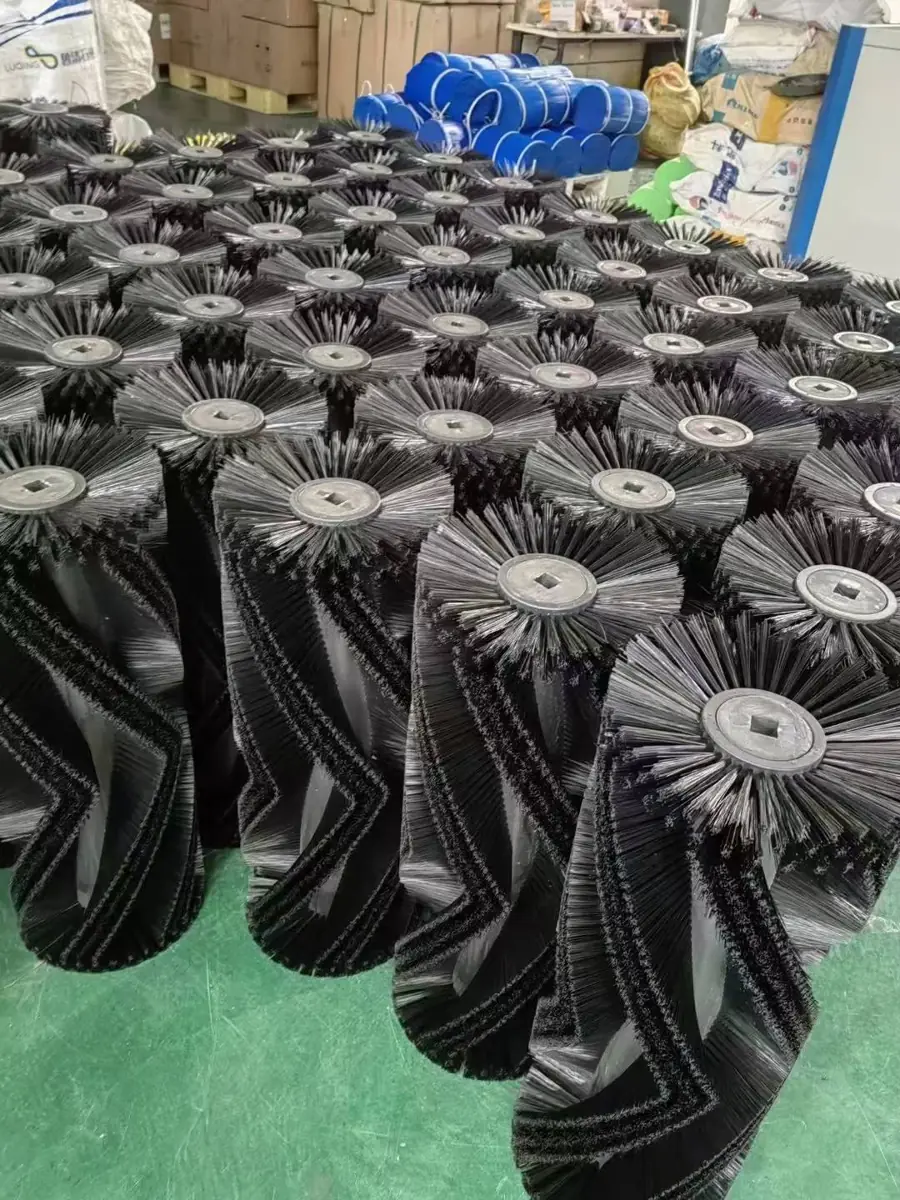
What does a spiral roller do that other builds cannot?
It conveys. The helix acts like an auger, pushing material, water and debris along the roller as it turns, which a straight-row brush cannot do. The tube can also be stripped and rewound with new strip when the fill wears out, and long lengths are quick to build because the strip is wound continuously.
For the full comparison with drilled-core brushes, including tuft patterns and when each build fits, see our spiral vs tufted roller brush guide.
How is a spiral brush roller wound?
Every spiral brush roller starts as one continuous channel strip brush. In this clip from our workshop, white nylon filament is locked into the metal channel on the strip machine, and the finished strip runs on to the winding bench, where it is wrapped around the tube in a helix at the pitch the roller needs.
Because the strip is made and wound in one run, long rollers do not need joins in the fill. The same tube can later be stripped and rewound when the brush wears out. Pitch and start options are explained in the spiral roller dimension chart above.
What can a spiral brush roller be filled with?
The strip can carry almost any brush filament. Common choices on spiral builds:
General cleaning
Springy fill for washing, dusting and conveying, wet or dry.
Chemical and wet lines
Low-cost fill that resists acids and alkalis in washing tanks.
Finishing
Closed-pitch abrasive spirals for deburring and satin finishing. See abrasive nylon roller brush grades.
Scale and rust
Crimped wire strip for descaling where refills are frequent.
Polishing
Tampico and similar fibers wound for polishing fruit, wood or metal.
Steel, stainless or plastic tube
Galvanized steel for general work, stainless for wet and food lines, plastic for light rollers.
Spiral brush roller questions
What is a spiral brush?
+
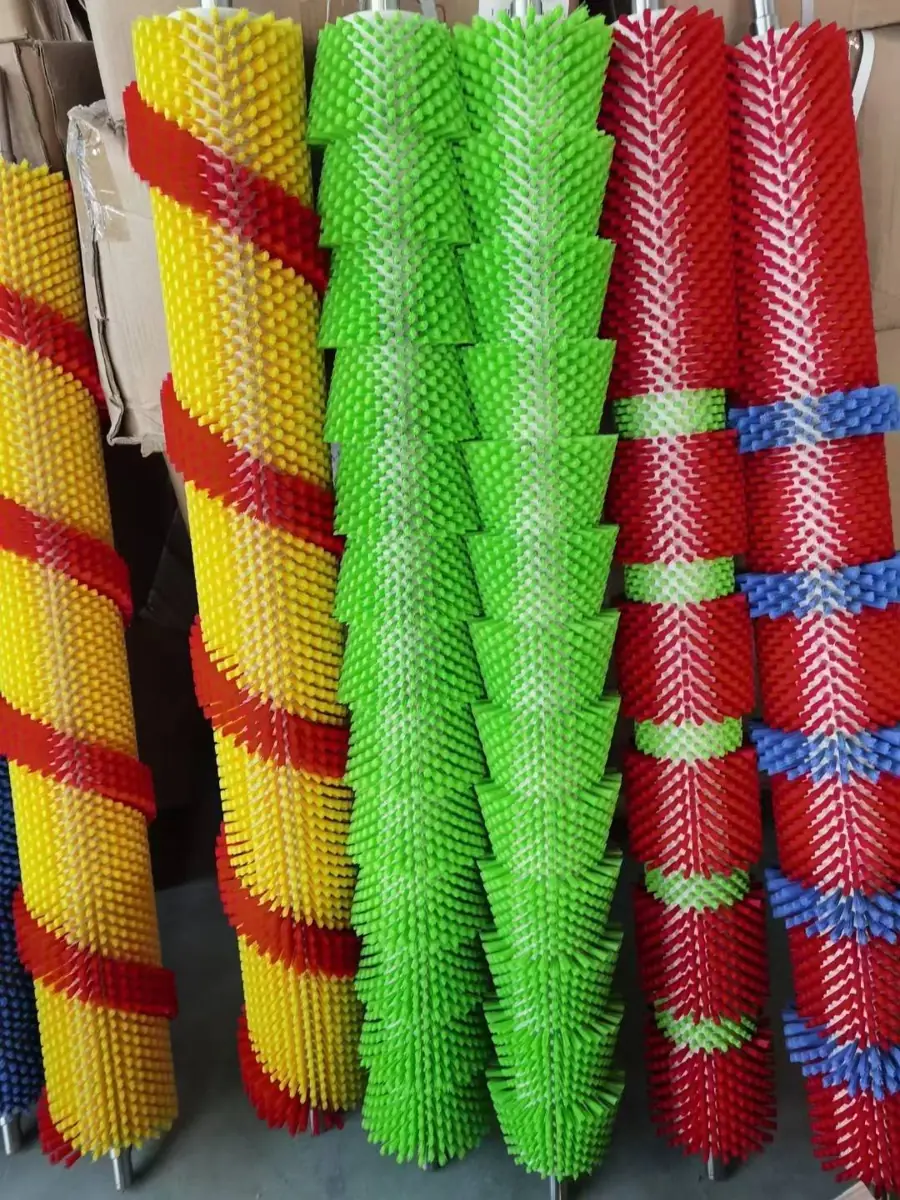
A spiral brush is a brush made by winding a metal channel strip, with filament crimped into it, around a tube or shaft in a helix. It is also called a coil brush or spiral wound brush. The gap between turns sets the density, from open spirals that convey material to closed winds that scrub.
Can you rewind our old spiral roller tube?
+
Often, yes. If the tube is straight and the journals and keyways are not worn, a rewind is the cheaper choice: we strip the worn strip and wind new fill on the same tube, so you keep the steel and the precision machining of the shaft ends. If the shaft is worn off-center, or return freight would cost more than a new shaft, we recommend a new roller instead.
How do I tell the direction of the spiral?
+
Stand at the drive end and look along the roller. If the strip turns away from you clockwise, it is a right-hand wind. Photograph the roller from the drive end and we will confirm it.
What is the difference between single and double start?
+
A single start has one strip running the full length. A double start has two strips wound side by side, which gives more contact at the same pitch and a smoother, more balanced roller.
Related brushes
Tell us the pitch, fill and tube
Mark dimensions A to J on a photo of the old roller, or send it from the drive end. We will work out the rest.