Industrial wire brush rollers
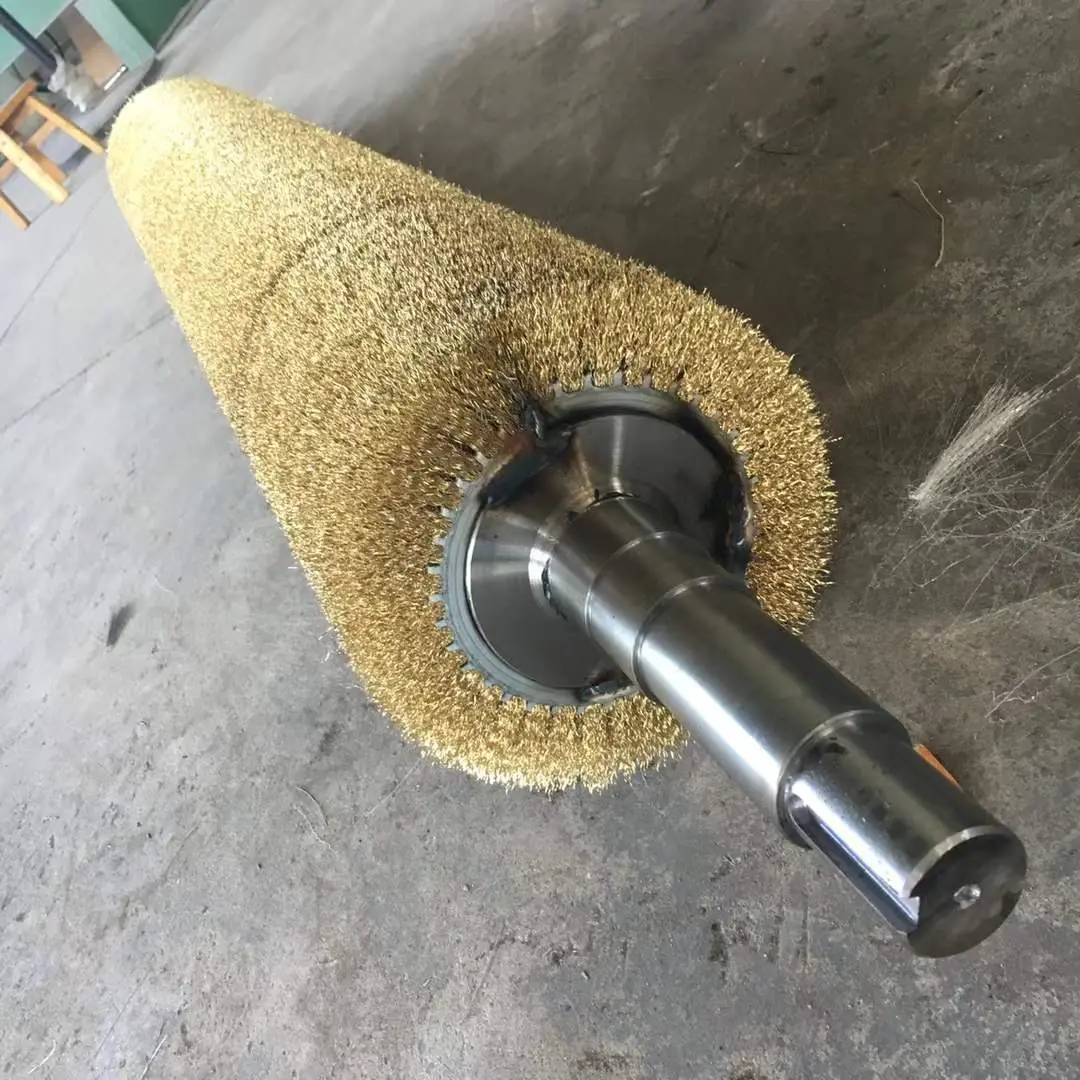
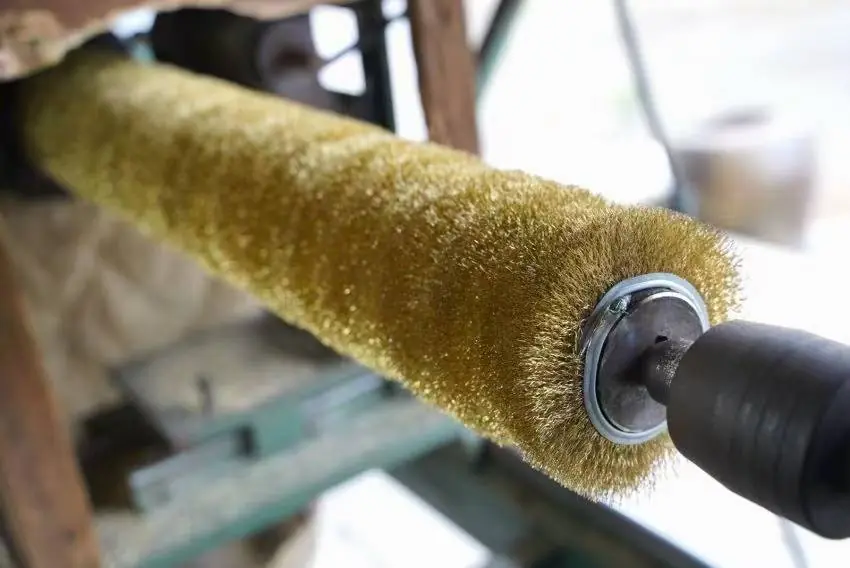
An industrial wire brush roller is a cylinder of crimped metal wire that spins against steel, stainless or aluminum to strip scale, rust, oxide and loose coating. We fill it in carbon steel, stainless or brass-coated wire, and turn the shaft to match the brush it replaces.
Which wire should the roller use?
Match the wire to the metal you are brushing. Carbon steel wire suits mild steel and heavy scale. Stainless wire is for stainless and aluminum, where iron particles would cause rust spots later. Brass-coated steel or solid brass is gentler and leaves a brighter, cleaner surface on soft metals.
After the alloy, three settings decide how hard the brush cuts. Thicker wire cuts faster but leaves deeper scratches. A shorter trim makes the fill stiffer. Higher density puts more wire tips on the work at once, which speeds up cleaning and spreads the wear.
| Wire | Use it for | Watch for |
|---|---|---|
| Carbon steel, crimped | Mill scale, rust, weld spatter, heavy oxide | Rusts if left wet; not for stainless parts |
| Stainless steel, crimped | Stainless strip, aluminum extrusions, wet lines | Work-hardens; slightly slower cut than carbon steel |
| Brass-coated steel | General cleaning with a brighter finish | Coating wears off at the tips in use |
| Solid brass | Soft metals, light deposits, non-sparking areas | Softer wire, so it wears faster under pressure |
Where are industrial wire brush rollers used?
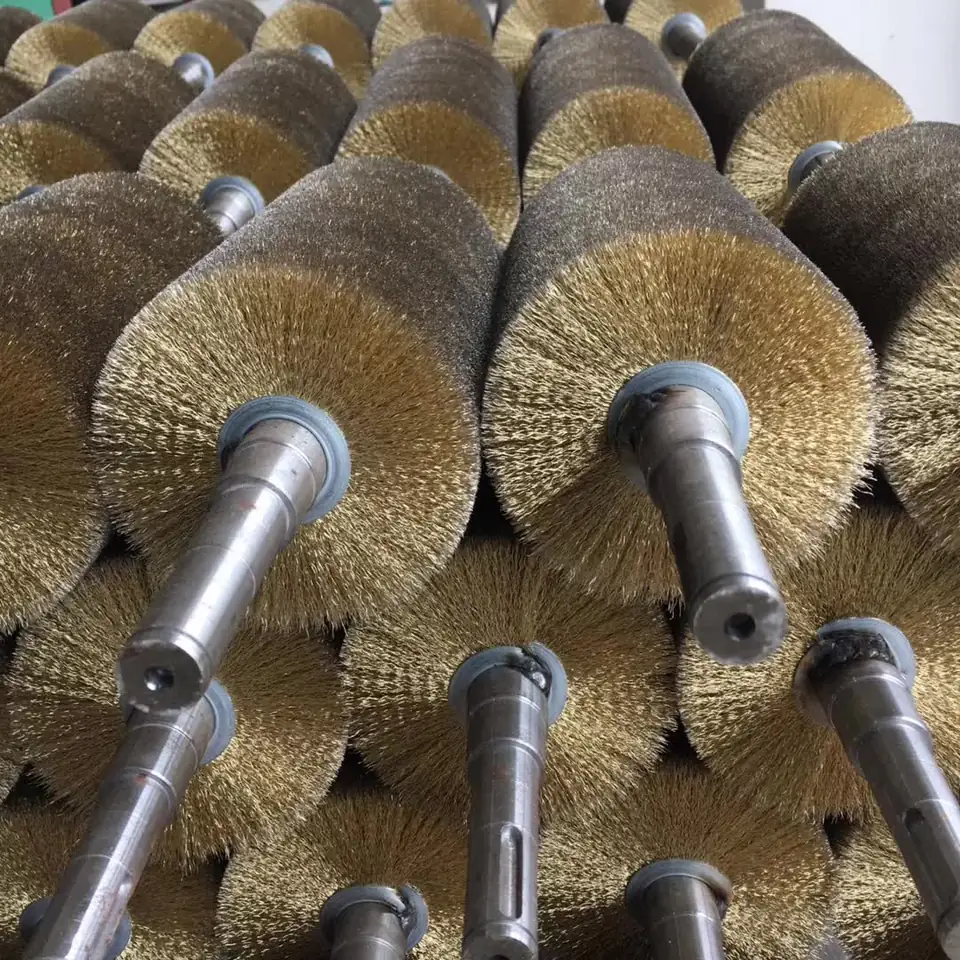
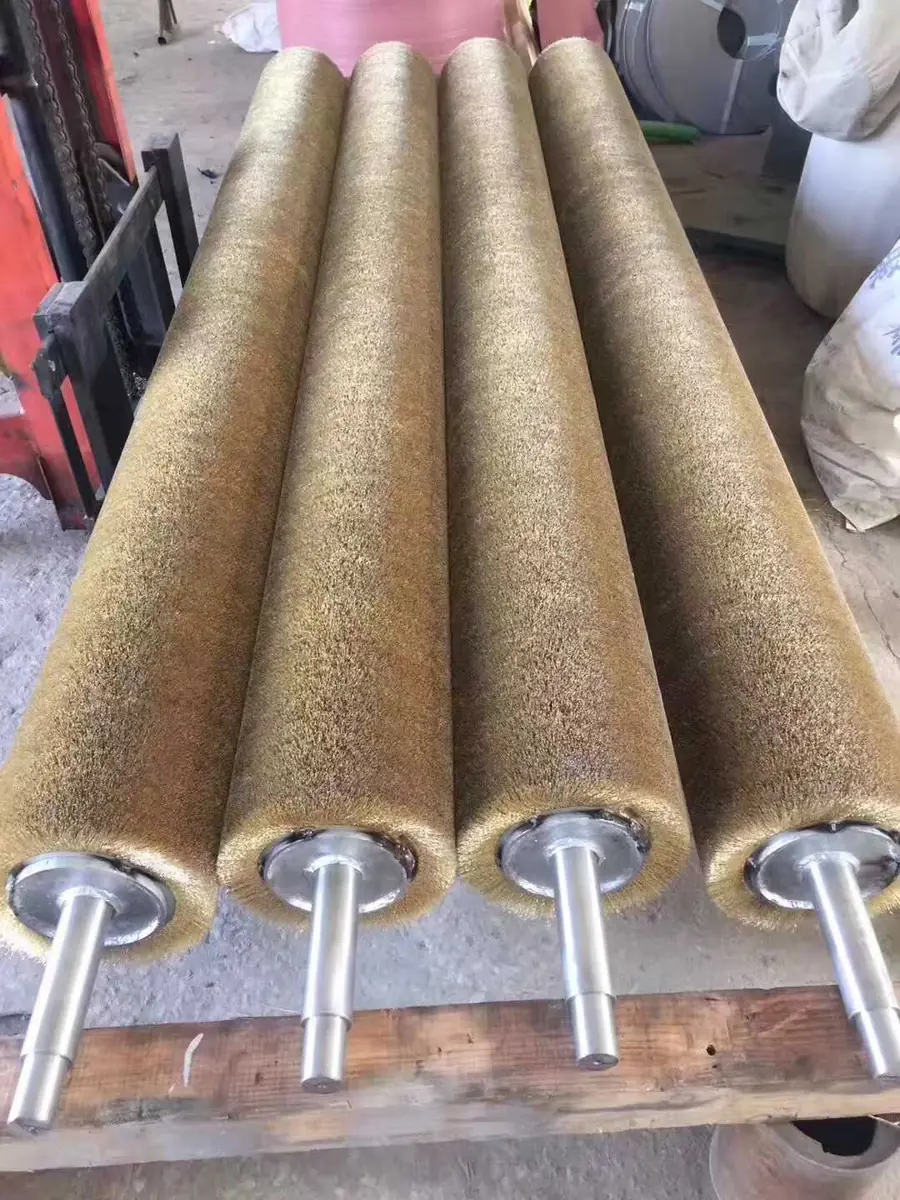
Pickling and galvanizing lines
Remove scale and smut after pickling, and clean strip before zinc or paint.
Pre-paint cleaning
Brush off oxide and dust so primer or electroplating bonds to bare metal.
Descaling before welding
Clear mill scale from plate edges and beams on shot-free lines.
Roll cleaning
Keep process rolls free of build-up in rolling and printing lines.
Sand and flash removal
Knock loose sand and thin flash off cast parts on a conveyor.
Wood texturing
Wire rollers pull soft grain out of pine and oak for a brushed, weathered surface.
How do you stop wire breaking out of the brush?
Wire breaks from fatigue, and fatigue comes from bending too far, too often. Most fly-out stops when the brush runs within its rated speed, touches the work lightly and is not pushed deeper to make up for wear. A shorter trim or a thicker wire also bends less per turn.
- Set interference so only the wire tips work. Deeper contact bends the wire at the root.
- Keep surface speed inside the safe speed rating for the brush diameter.
- Reverse rotation now and then if your machine allows it, so the wire wears evenly.
- When streaks appear, check for a flat spot on the brush before changing wire type.
Pressing harder does not clean better. Of the broken wire rollers we see, most come from one of two causes: too much pressure, which keeps every wire bent hard on each turn until it fatigues, or too much speed, which makes the wire vibrate at the root until it snaps off flush with the core.
Industrial wire brush roller questions
Why crimped wire and not straight wire?
+
Crimped wire has small waves along its length. Neighboring wires support each other, so the fill stays springy and the tips keep working as the brush wears. Straight wire packs tighter and cuts harder, but it is stiffer and can mark the surface.
Can one wire brush roller mix brass and steel wire?
+
Yes, we can blend wire types or build sections of different wire along one roller. Tell us what the mix needs to achieve, such as a softer edge zone, and we will propose a layout.
Do you build wire rollers as stacked rings?
+
Yes. For wide strip lines we can build the brush from wire rings pressed onto the shaft. Worn rings in the middle can then be swapped without scrapping the whole roller.
Related roller brushes
Replacing a wire roller?
Send photos of the old brush with the shaft ends measured. Our roller brush measuring checklist lists what to include.